

Why This Market Drop Feels So Uncomfortable
What’s really happening and how to respond

Markets are down.
Prices are up.
And it doesn’t feel good.
If this quarter has made you uneasy, you’re not alone.
When your portfolio drops while everyday costs stay high and headlines get louder, it’s easy to feel like something is wrong.
Maybe this time might be different? It’s not.
But it does feel that way in the moment.
What’s Actually Happening
This quarter hasn’t just been about markets going down.
It’s been about uncertainty showing up in multiple areas at once.
Stocks are falling
Headlines are changing quickly
And the cost of everyday life is still elevated
You’re seeing it in small but noticeable ways.
Gas prices have pushed back above $4 in some areas, and higher interest rates are still impacting borrowing costs—from mortgages to credit cards.
Individually, these may not seem overwhelming. But together, they start to weigh on confidence. At the same time:
AI stocks that were leading are pulling back
Big tech leadership is starting to fade
Interest rate expectations are shifting again
Geopolitical risk is back in focus
That combination creates something more powerful than a market decline:
Uncertainty.
And uncertainty is what makes this feel harder than the numbers alone suggest.
Before reacting, it helps to zoom out.
What Investors Tend to Forget in Moments Like This
Markets don’t go up in a straight line. They never have.
Since 1950, the market has experienced dozens of pullbacks, corrections, and even major declines along the way.
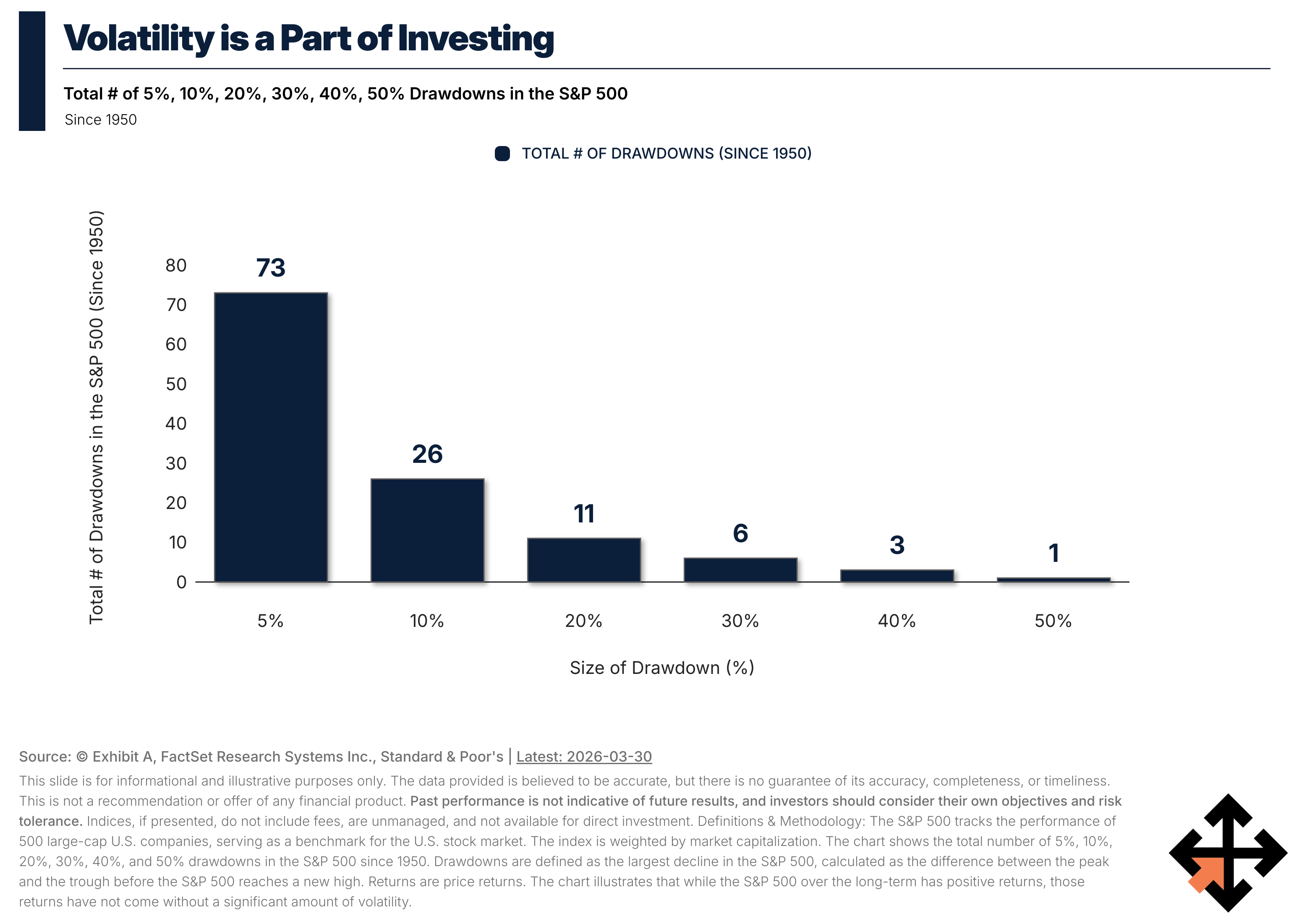
Look at that again.
Small drops (5–10%) happen all the time
Larger declines (20%+) happen more often than people expect
Even sharp drops are part of long-term investing
And yet…
Every time it happens, it feels like something is different.
Like this time might be the one that doesn’t recover.
It isn’t.
But here’s the part most people don’t realize:
Even in years when the market drops along the way…
It often still finishes higher by the end of the year.
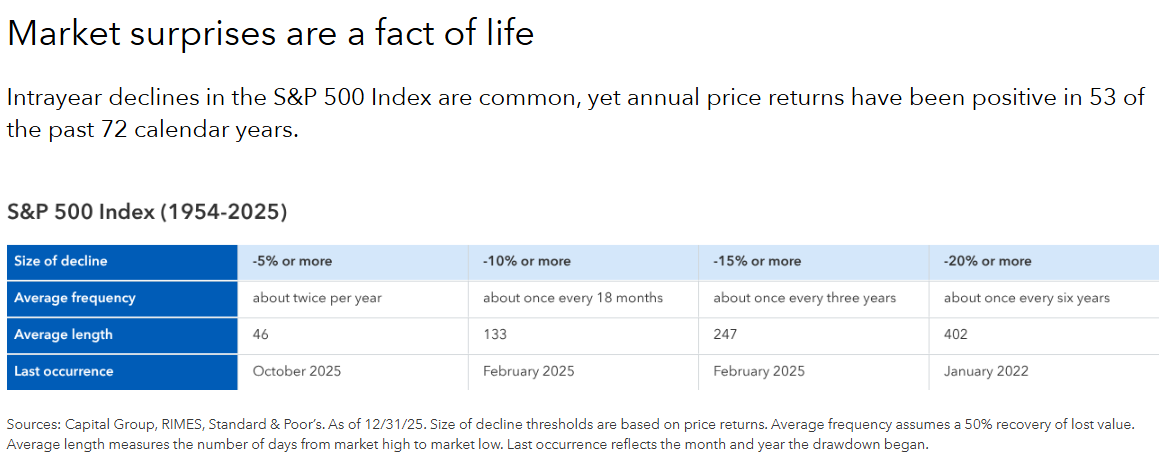
Over the past 70+ years, the market has finished positive in most years, even though declines happened along the way.
That’s why reacting to short-term drops can be so costly.
You’re often making decisions in the middle of the story… not at the end.
Why This Feels Worse Than It Is
Because investing isn’t just numbers. It’s emotions.
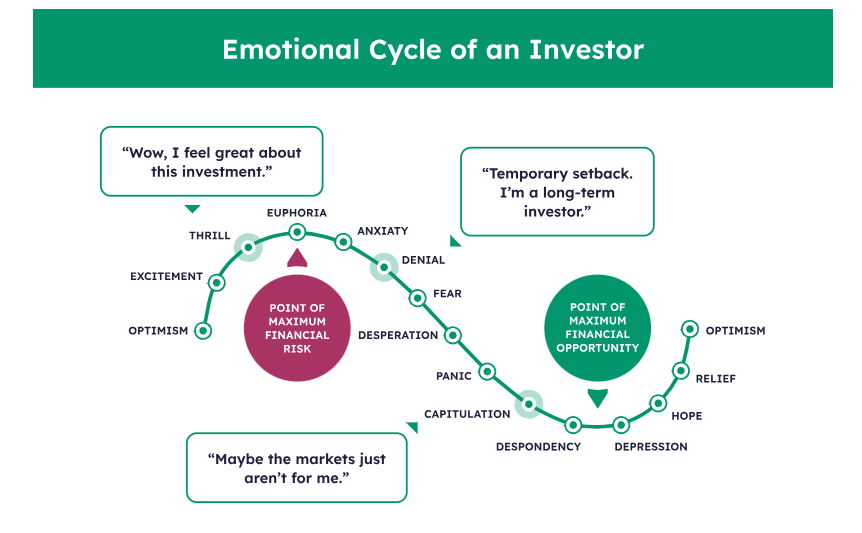
Look closely at that chart.
The hardest moments aren’t always when the market is at its lowest.
They’re when emotions take over:
Feeling overly confident when things are going well
Wanting to give up when things feel at their worst
And the biggest opportunities?
They often show up when things feel the most uncomfortable.
What Successful Investors Do Differently
They don’t avoid market drops.
They plan for them.
During periods like this, the most successful investors tend to:
Stay invested
Rebalance instead of react
Add consistently—not emotionally
Focus on long-term goals, not short-term headlines
Because they understand something most people don’t:
The market doesn’t reward panic. It rewards discipline.
What To Do Right Now
If you’re feeling uneasy, that’s normal.
But before making any decisions, ask yourself:
Has my long-term plan changed?
Has my time horizon changed?
Has my need for this money changed?
If the answer is no…
Then your strategy likely shouldn’t change either.
Stepping Back Even Further
It’s easy to focus on what’s happening right now.
But zooming out even more tells a different story.
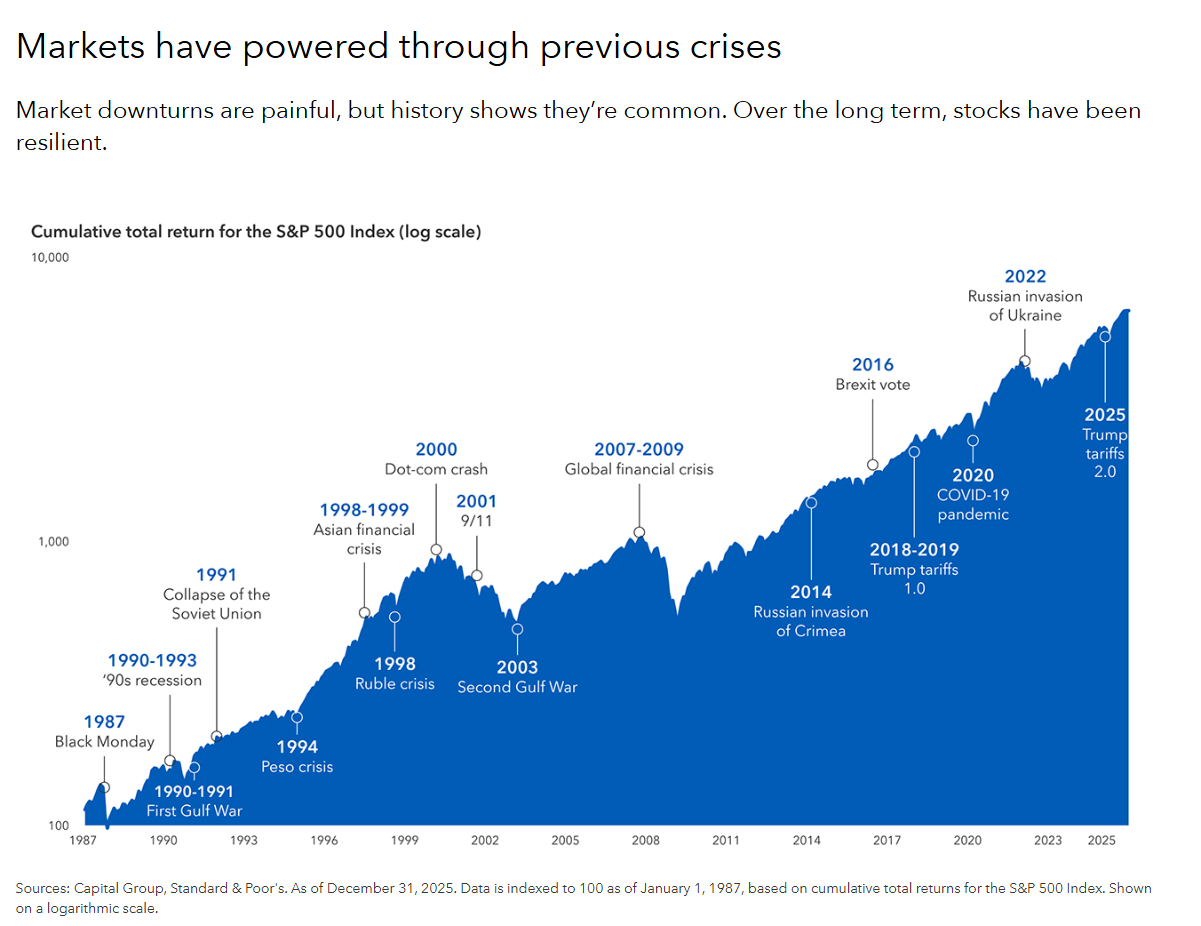
Every point on that chart represents a moment that felt uncertain at the time:
Recessions
Wars
Financial crises
Global events that dominated headlines
And yet, the long-term direction has remained the same.
Up.
Not in a straight line.
Not without setbacks.
But forward.

Final Thought
Market drops aren’t a flaw. They’re part of how long-term growth happens.
The investors who succeed aren’t the ones who avoid them.
They’re the ones who understand them and stay the course through them.
Because in moments like this, clarity matters most.
In closing, if you have questions, concerns, or just want to talk through your plan—we’re here. Send us an email or text, call us or contact us here.