

Where Did All My Money Go?
A simple framework to give every dollar a purpose.

If you’ve ever looked at your bank account at the end of the month and wondered:
“Where did all my money go?”
You’re not alone.
Many financial challenges aren’t caused by a lack of income. They’re caused by money having no clear direction.
I’ve worked with people earning $75,000 who save consistently and feel financially secure.
I’ve also worked with people earning over $500,000 who feel stressed about money every month.
The difference is rarely income. The difference is intention.
Give Every Dollar a Job
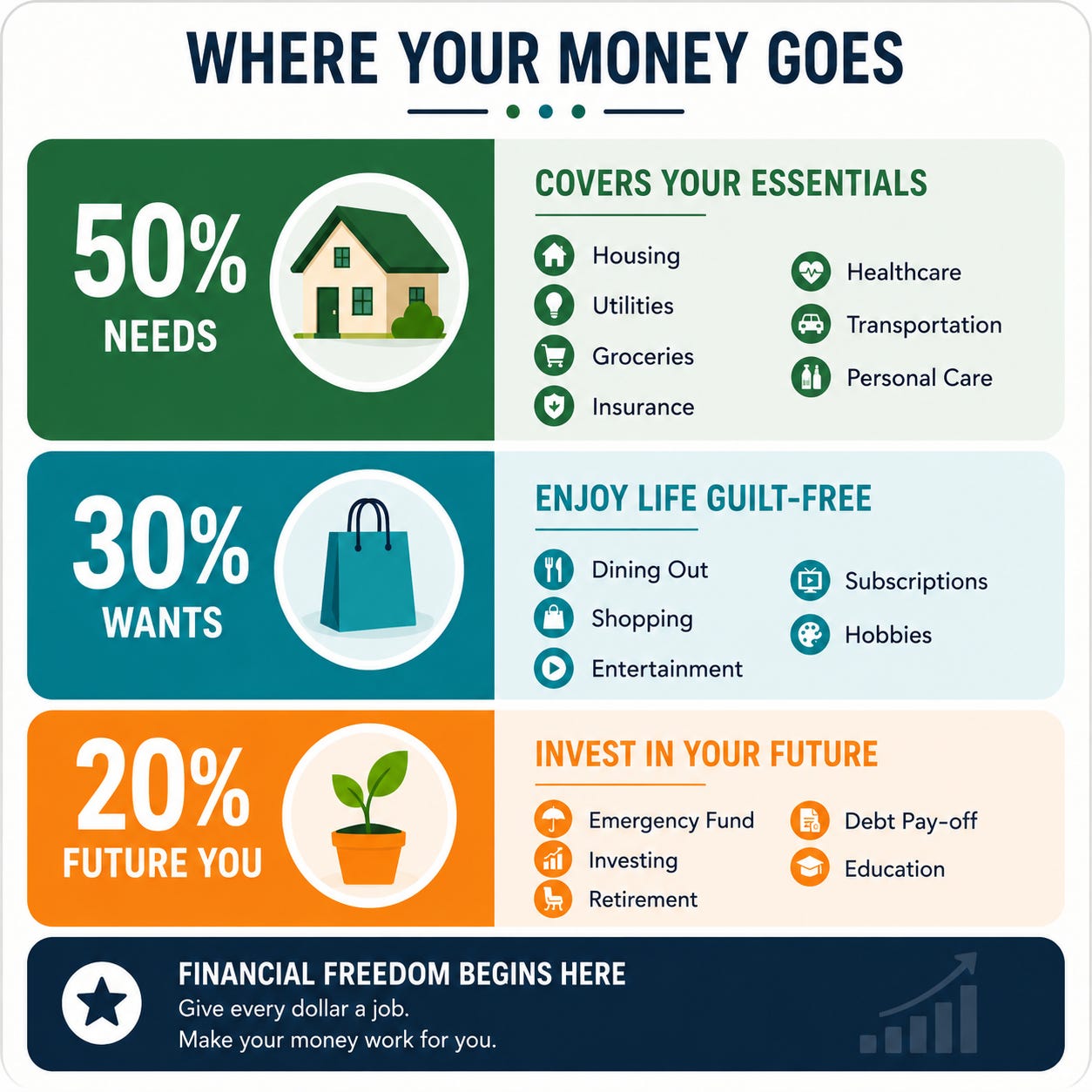
One of the simplest budgeting frameworks is the 50/30/20 Rule:
50% — Needs
Housing, groceries, insurance, transportation, utilities, and other essential expenses.
30% — Wants
Travel, dining out, entertainment, hobbies, and the things that make life enjoyable.
20% — Future You
Retirement savings, investing, emergency reserves, and paying down debt.
Is it perfect? No.
A family in New York City may have a very different reality than a family in Ohio.
But the principle is powerful: Give every dollar a purpose before you spend it.
The Mistake Most People Make
Most people save whatever happens to be left at the end of the month.
Unfortunately, there usually isn’t much left.
People who build wealth tend to reverse the process: Save first. Spend second.
That simple shift changes everything.
What Budgeting Is Really About
Many people think budgeting means restriction.
I think it means freedom.
A budget isn’t about saying “no” to everything you enjoy.
It’s about making sure the things you spend money on align with what matters most to you.
As Morgan Housel reminds us, wealth is what you don’t see. It’s the money that wasn’t spent.
Final Thought
Financial freedom doesn’t begin when you earn more.
It begins when your money has a purpose.
Because the goal isn’t to become a prisoner of a spreadsheet.
The goal is to make sure your money is helping you build the life you actually want.