

The Biggest Retirement Risks Happen After Retirement
Why retirement success depends on more than just investment returns.

Many people spend 40 years preparing for retirement.
Very few spend enough time preparing for what happens next.
Retirement planning is often framed as a single number:
“How much do I need to retire?”
But once the paycheck stops, the challenge changes completely.
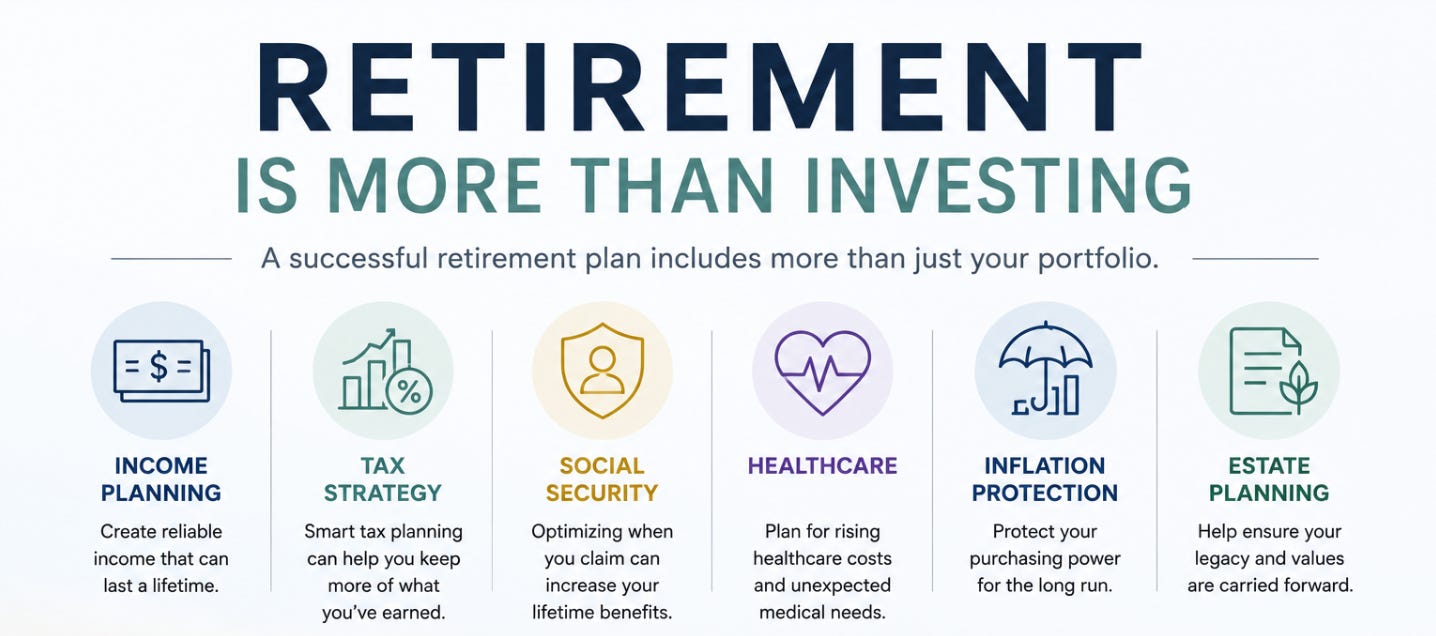
Now the focus shifts to:
generating income
managing taxes
handling market volatility
protecting purchasing power
and making smart financial decisions for decades.
And one of the biggest risks a retiree faces has little to do with picking the “right” investments.
It’s called sequence of returns risk.
In plain English: a bad market early in retirement can have an outsized impact on a portfolio because withdrawals are happening at the same time investments are declining.
Two retirees could earn the exact same long-term average return… but the one who experiences poor returns in the first few years of retirement may end up in a much weaker financial position.
That’s why retirement planning is about far more than investment performance.
It’s about flexibility.
The Retirees Who Tend To Do Best
The most successful retirees are often not the ones chasing the highest returns.
They’re the ones with:
flexibility in spending
a thoughtful withdrawal strategy
tax-efficient income planning
and a plan that allows them to avoid emotional decisions during market volatility.
A few examples:
1. Maintaining Cash Reserves
Retirees who keep adequate cash and short-term reserves may avoid having to sell stocks during market downturns.
That can provide flexibility and time for markets to recover.
2. Being Flexible With Spending
The ability to temporarily reduce discretionary spending during difficult market environments can significantly improve the longevity of a retirement portfolio.
Rigid withdrawal habits can create unnecessary pressure.
3. Delaying Social Security
For many retirees, delaying Social Security can meaningfully increase guaranteed lifetime income.
That larger inflation-adjusted benefit can reduce long-term pressure on investment portfolios later in life.
4. Taking Advantage of Low-Income Years
The years between retirement and Required Minimum Distributions (RMDs) can create valuable tax-planning opportunities.
Strategies such as:
Roth conversions,
capital gains harvesting,
and tax bracket management
…may create meaningful long-term benefits if executed thoughtfully.
5. Planning For Inflation
One of the biggest mistakes retirees make is becoming too conservative.
Retirement can last 25–35 years or longer. Inflation still matters.
Even in retirement, portfolios often need growth to help preserve purchasing power over time.
Retirement Is No Longer Just About “Having Enough”
The reality is that retirement success is often driven less by investment selection and more by decision-making.
The investments matter.
But so does:
when you claim Social Security,
where you withdraw money from,
how taxes are managed,
how much flexibility exists in the plan,
and whether emotional decisions disrupt long-term compounding.
That’s where comprehensive financial planning becomes so important.
A good retirement plan is designed to create confidence and flexibility — especially during uncertain markets.
Because retirement is not just about reaching the finish line.
It’s about making sure the next 20–30 years work the way you want them to.