

Stop Obsessing Over Returns
The simple shift that builds wealth faster in your early years

Most people starting their investment journey ask the same question:
“What should I invest in?”
They want the best stock.
The best fund.
The best return.
But here’s the truth:
Early in your investing life, your returns matter far less than you think.
The Real Driver of Early Wealth
When you’re just getting started, your portfolio is small.
Which means: Even great investment returns don’t move the needle much.
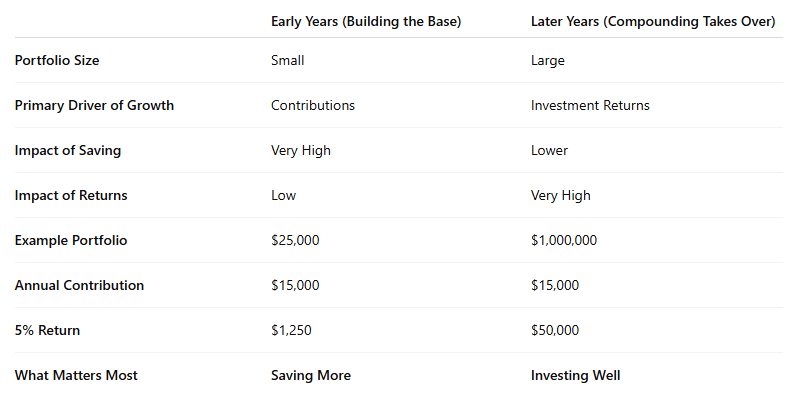
Let’s look at a simple example:
Investor A (Early Stage)
Portfolio: $25,000
Annual contribution: $15,000
5% return = $1,250
Growth Impact:
Contribution impact: $15,000
Return impact: $1,250
Read that again.
You added 12x more through saving than you earned through investing.
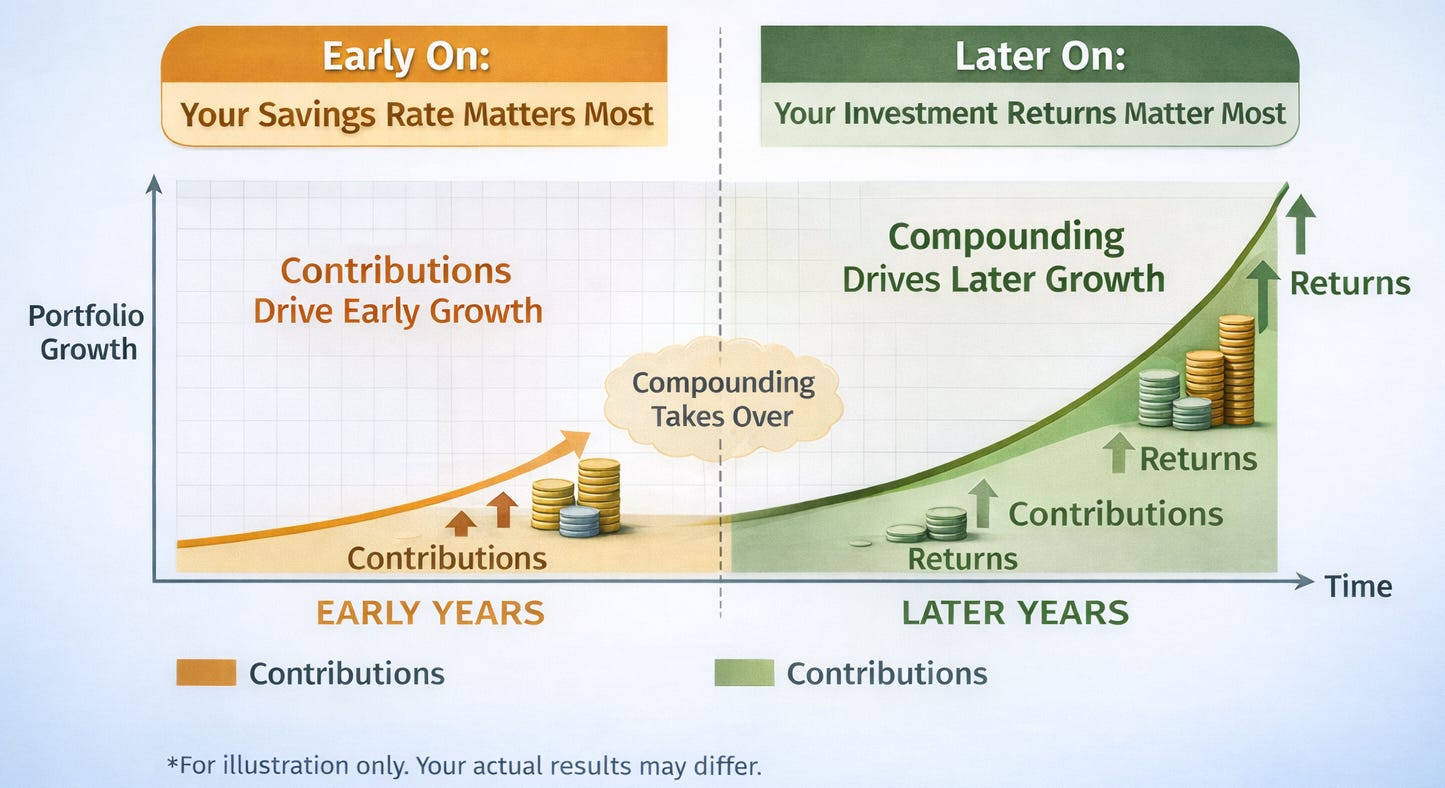
What Actually Matters Early
In the early years, your biggest financial advantage isn’t your portfolio.
It’s your ability to save.
That’s what drives progress.
Not picking the perfect investment.
Not timing the market.
Not chasing returns.
Just consistently putting money to work.
When the Game Changes
Fast forward.
Investor B (Later Stage)
Portfolio: $1,000,000
Annual contribution: $15,000
5% return = $50,000
Growth Impact
Contribution impact: $15,000
Return impact: $50,000
Now the script flips and your money is doing more work than you are.
The Shift Most People Miss
There are really two phases to building wealth:
Early vs. Later: What Actually Drives Wealth
Early on, you build the portfolio.
Later, the portfolio builds itself.
What This Means for You
If you’re early in your career:
Focus on increasing your savings rate
Take advantage of employer matches
Automate contributions
Don’t overcomplicate your investments
If you’re further along:
Asset allocation matters more
Risk management becomes critical
Small changes in return can have a big impact
The best investment decision early on isn’t picking the perfect stock. It’s building the habit of saving consistently.
Final Thought
Wealth isn’t built by chasing returns.
It’s built by:
Saving consistently → investing wisely → letting compounding take over
In that order.
If you get the first part right, the rest becomes a lot easier.